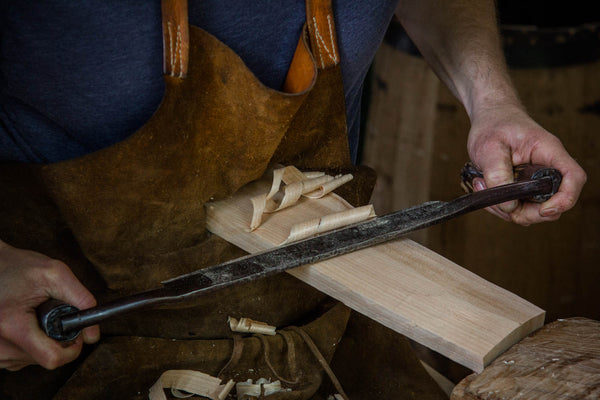
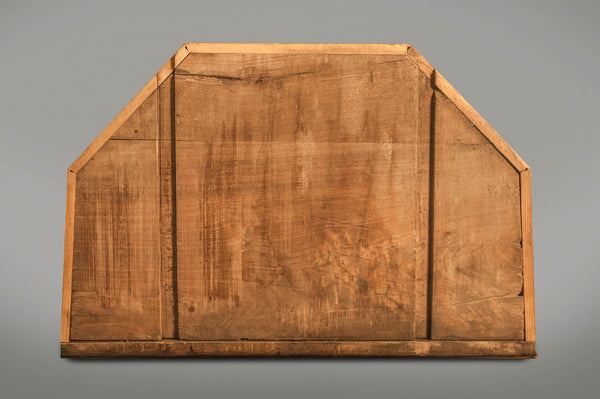
Traditional coopering in Europe employed quarter-split or riven wood to make the walls and heads of the vessels. In a world where sawing was time-consuming, splitting straight-grained logs into flat bolts of wood was the most expeditious processing method. Riving a knot-free log is a satisfying experience, because it’s surprising how easily it yields to iron wedges, wooden gluts, and a froe. Quarter-split material is a pleasure to work with hands tools, even after several years of seasoning. Any type of wood that grows with clear grain, quartered from a mature log, is ideal for coopering. Different species historically used for coopering include red and white oak, chestnut, white ash, spruce, fir, yellow pine, white pine, tulip poplar, cypress, and...
In this latest episode, the guys explain the setup to David Pye’s discussion about the value of workmanship. Pye explains that it would be a mistake to give too much credit to the design when the quality of the finished object is greatly determined by the artisan’s touch. Pye asserts some bold things in this chapter: “Good material is a myth” and “a street full of parked cars is jejune.” Listen to Joshua and Mike discuss this foundational chapter.
SHOW NOTES
Order your copy of the book here: The Nature and Art of Workmanship
Joshua Klein’s article in Issue Seven: ”A Fresh & Unexpected Beauty: Understanding David Pye’s ‘Workmanship of Risk’”
It seems like everyone these days is developing an app for their business or product – download the app to your smartphone, and you can carry books, lectures, and blog archives with you wherever you go. Most apps simply streamline content that’s already available on a website for easy, one-stop access on the little screen of your phone. This can make information easier to get at and use, especially for the ham-handed among us. And that, I suppose, is a valuable thing. I'm sure we were Googling something important here. It’s interesting to think through the progress of our smartphone technology since the first iPhone was introduced in 2007 – really, just a few years ago. Think of all the...
In this episode, Joshua and Mike kick off a mini-series chapter-by-chapter walkthrough of David Pye’s classic book The Nature and Art of Workmanship. Lots of craftspeople have heard of Pye, but few today understand (or have ever even read) his illuminating book. In this episode, the guys discuss the introduction which charts the course to dispelling myths and misunderstandings. Craft matters. And because of this, Pye invites us to engage in it thoughtfully. SHOW NOTES Order your copy of the book here: The Nature and Art of Workmanship Joshua Klein’s article in Issue Seven: ”A Fresh & Unexpected Beauty: Understanding David Pye’s ‘Workmanship of Risk’” Jeff Miller’s article in Issue Ten: “An Exercise in Precision & Randomness: Replicating David Pye’s...
Good ideas often come from unlikely places. My most recent inspiration came from a dusty old pile of books in an antique store where my wife uncovered a decades-old exhibition catalogue featuring the furniture of the Swisegood school of cabinetmaking. The exhibition opened in November 1973, at the Museum of Early Southern Decorative Arts (MESDA) in Winston-Salem, North Carolina, and featured a growing collection of furniture made by a group of little-known craftsmen from the Yadkin River Valley in Rowan (now Davidson) County, North Carolina. One of the chief forms of furniture produced by the Swisegood school was the corner cabinet, and in leafing through the catalogue, I became enamored with the way these particular craftsmen mixed rustic, country charm...